Literal comprehension questions are questions that may be answered by recalling or locating information directly stated in a text. They may involve questions that begin with Who, What, When, Where, Why and How.
Sometimes, it may be easy to recall the information to answer a literal question, for example: ‘What was the main character’s name?’ Other times, it may be helpful to look back through the text to locate the information you are looking for. You could even circle or highlight it!
Literal questions are the simplest type of comprehension question. They have a definite answer that is explicitly stated in the text.
What are inferential comprehension questions?
Inferential comprehension questions are questions that ask a reader to use information in the text, as well as their own background knowledge, to answer the question.
Let's look at examples of literal and inferential comprehension questions
Literal Questions
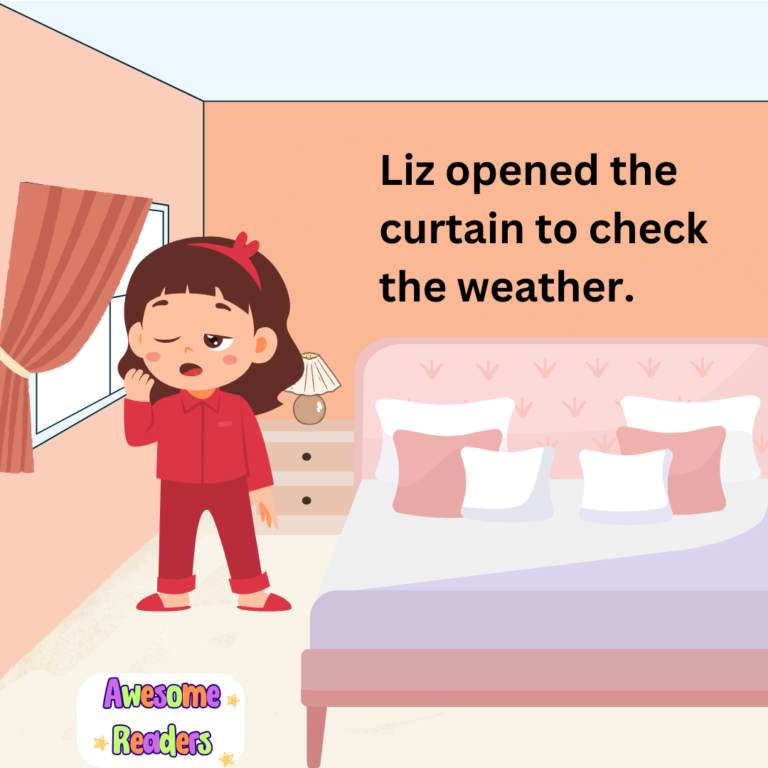
Why did Liz open the curtain?
It explicitly states in the text that Liz opened the curtain to check the weather.
Answer: Liz opened the curtain to check the weather.
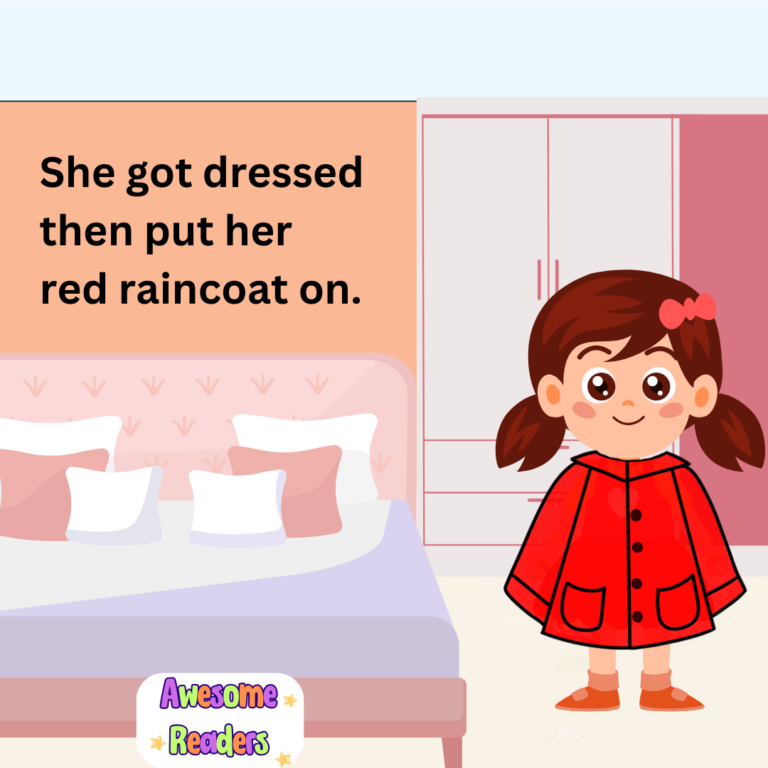
What colour was Liz’s raincoat?
The text states that Liz’s raincoat was red.
Answer: Liz’s raincoat was red.
Inferencial Question
Why did Liz put a raincoat on?
This inferential question requires you to use some information from the text, as well as your own background knowledge to answer it.
The text states that:
Liz opened the curtain to check the weather and
She put a raincoat on.
It is commonly known that people wear raincoats when it rains. Therefore, we can infer that it was raining.
Answer: Liz put a raincoat on because it was raining.
Tip – To answer a question in a full sentence, you can reword part of the question and use it as a sentence starter, as seen in the examples above.
In this article, we explored the difference between literal and inferential comprehension questions.
Literal comprehension questions can be answered by recalling information stated explicitly in a text.
Inferential comprehension questions can be answered by using some information from the text, as well as your own background knowledge.
We hope you enjoyed this article!
Our Awesome Readers: Stories for practising reading skills are designed for children aged 5-8 and have teacher-created reading activities at the back, including literal and inferential comprehension questions.
Check out our
Awesome Reader
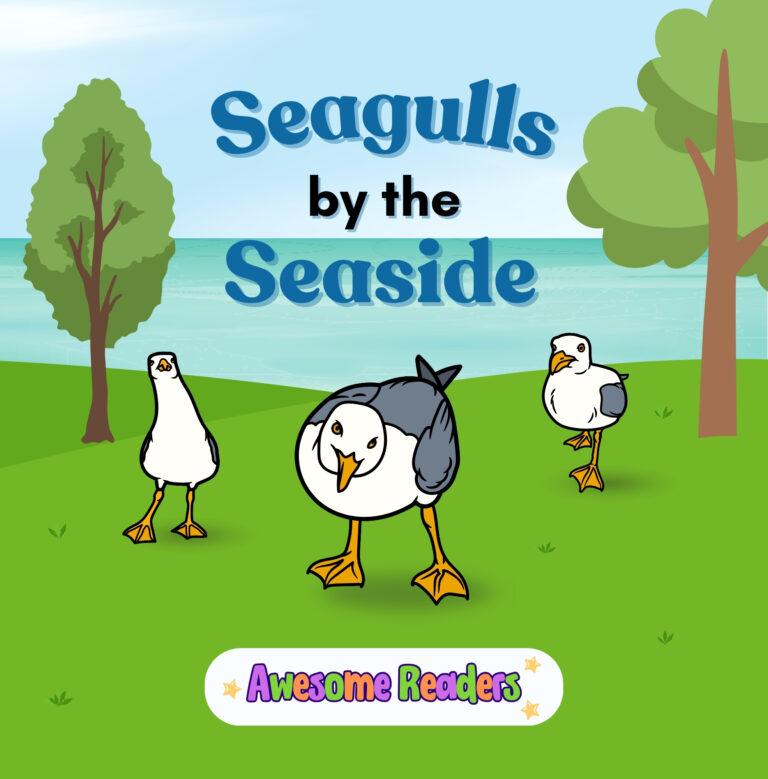
Seagulls by the Seaside, designed for children aged 5-8.
(Remember to update the Amazon URL to match your country's location.)
Our Awesome Readers for early learners are designed for children aged 0-6.
This book is designed for children aged 2-6.
It has an introduction to literal and inferential comprehension questions at the back, for ages 4-5, as well as experiential learning activity ideas for Maths and Music.
(Remember to update the Amazon URL to match your country's
Awesome Readers share affiliate links to our products on Amazon, as well as other resources we find valuable. As an Amazon Associate, we earn from qualifying purchases.